How do we build communities that last for centuries? By relying on our own public schools, libraries, and emergency services. Right now, across the United States, public facilities are proving they are much more stable than private businesses, wealthy donors, or private charities. While a rich donor can lose their money and a private company can go bankrupt tomorrow, public services endure. This happens because they are funded by the public—all of us—meaning they do not depend on one person’s mood or the stock market. Because they belong to the community, public services are designed to stay open through tough times to serve everyone, forever.
Our public services have unmatched staying power. In fact, data shows the average age of a public school building is about 49 years old, with many serving families for over a century. Now, compare that to the private sector. U.S. public companies have increasingly shorter lifespans, with many lasting fewer than five years before shutting down. Private charities and nonprofit groups also face a hard time. If their wealthy donors lose interest or the economy drops, they often have to close their doors.
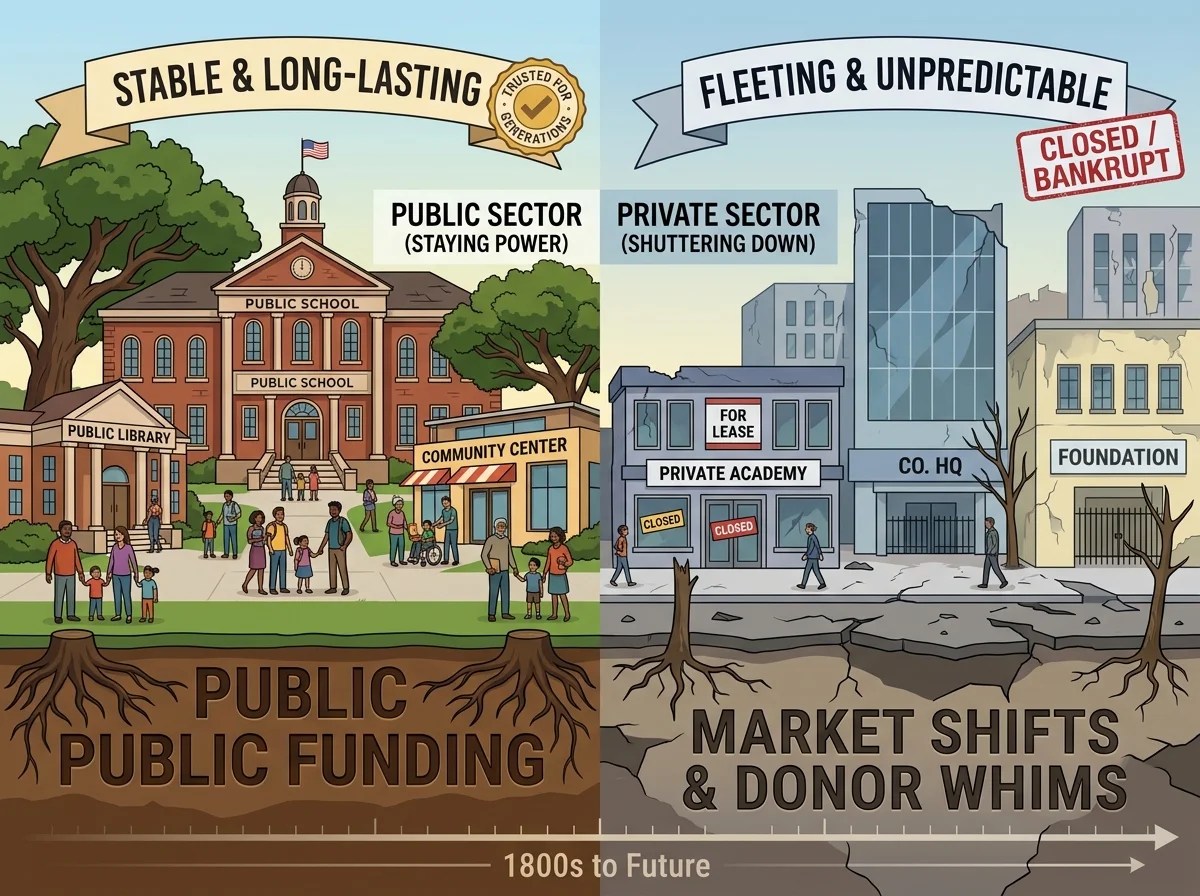
We must be careful about moving our trust to the private sector. If we let private companies and rich donors take over our schools and community services, we put our future on shaky ground. Unlike public services, private ones can vanish when they stop making money or when a donor changes their mind. If we do not protect and fund our public spaces, we risk losing the very things that keep our neighborhoods strong and safe for generations to come.
About the Author
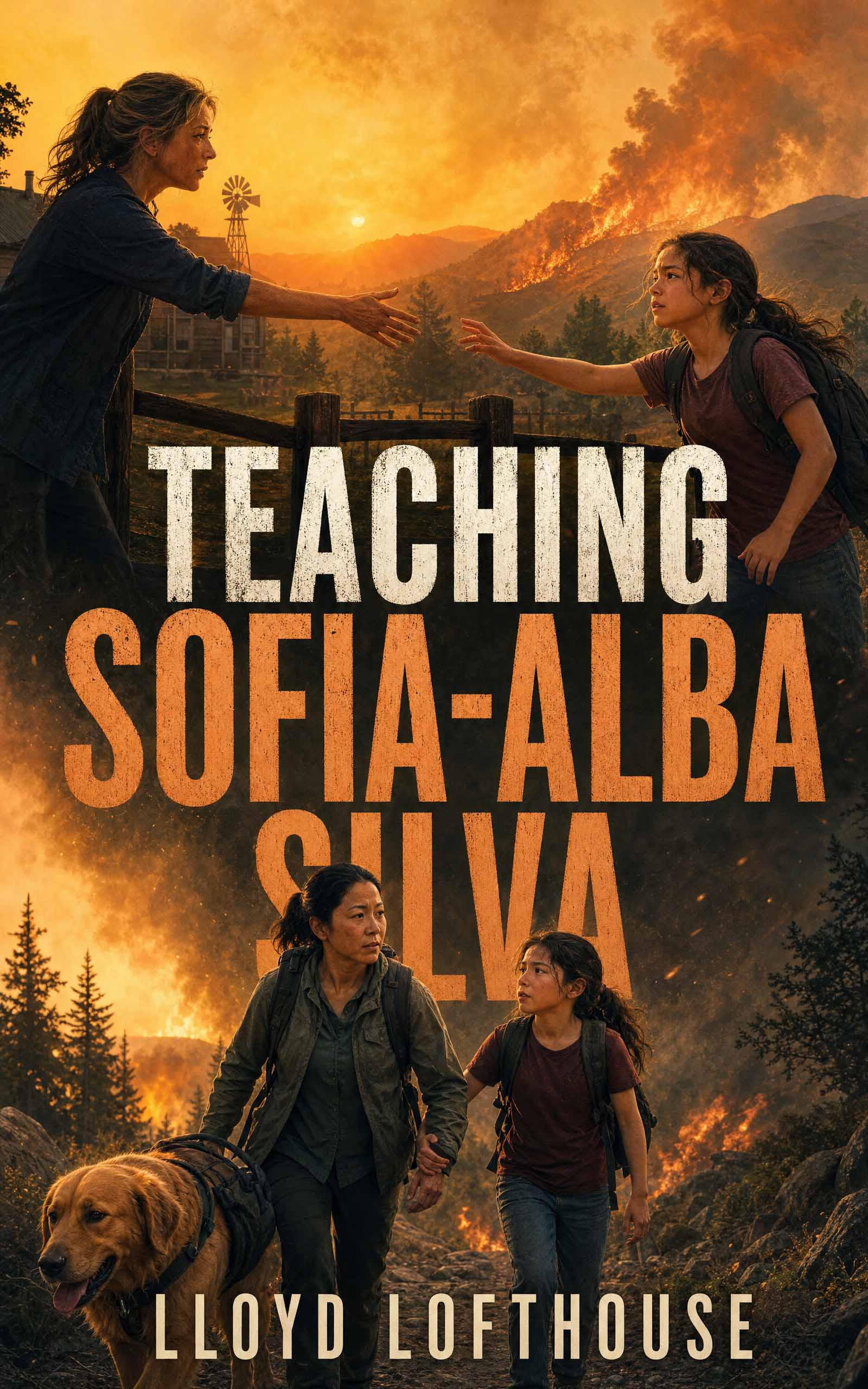
Lloyd Lofthouse is an author, former public school teacher, and U.S. Marine Corps combat veteran who served in Vietnam. Having spent years inside the classroom, Lloyd knows firsthand how vital strong, caring public schools are to young lives. He brings that real-world passion into his new novella, Teaching Sofia-Alba Silva. In this moving story, a retired teacher who taught two generations of the same family helps young Sofia escape a raging wildfire near the ranch where she lives with her widowed mother, becoming a lasting pillar of support for the grieving family. You can pre-order or grab your eBook copy of Teaching Sofia-Alba Silva on Amazon today
and experience a story about resilience, second chances, and the lasting power of those who teach.


Comments are welcome — pro or con. However, comments must focus on the topic of the post, be civil and avoid ad hominem attacks.